
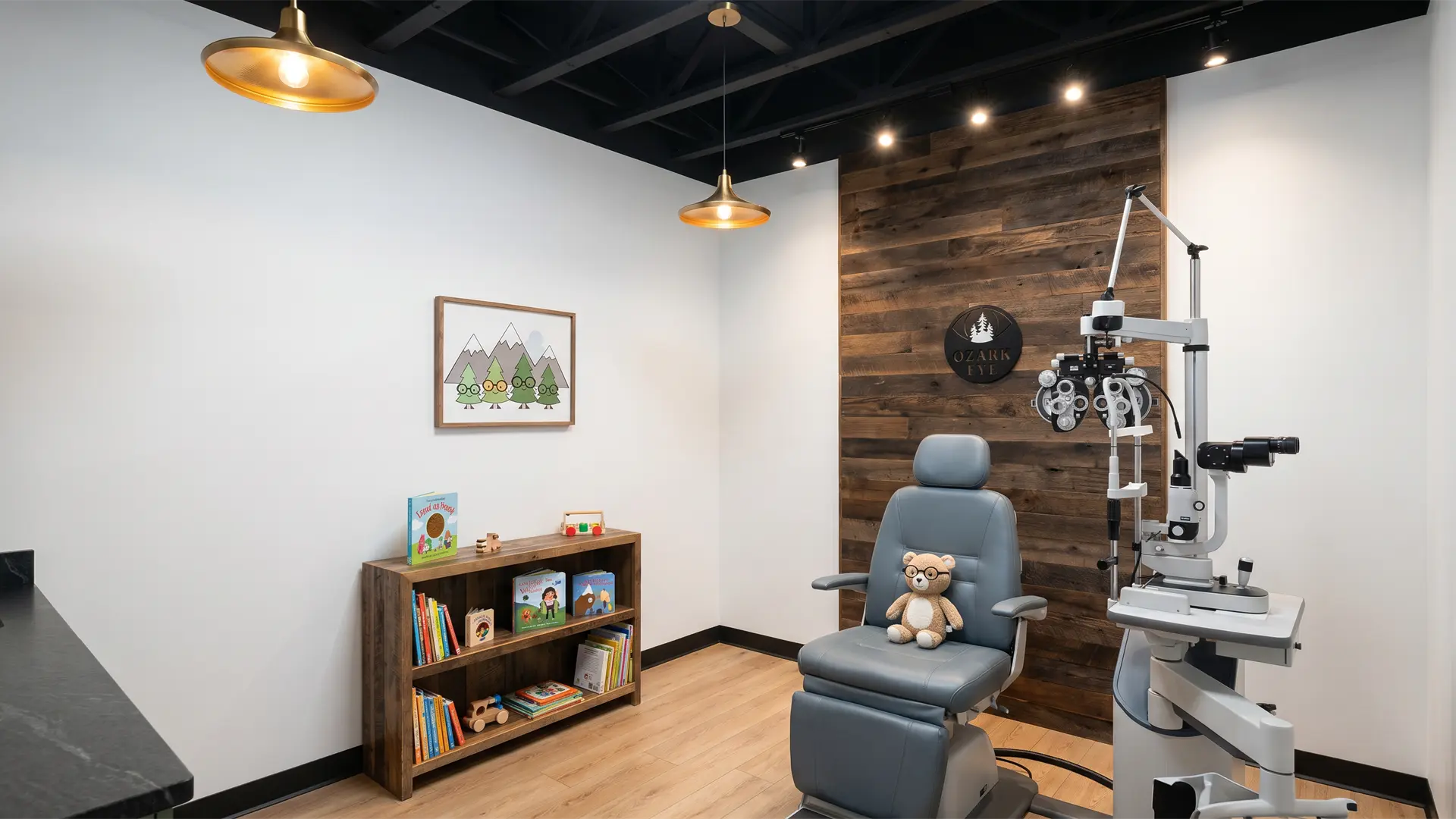
Pediatric Eye Exams in Pea Ridge
Up to 80% of childhood learning is visual. A kid who can't see well often gets labeled as struggling — when really, they just need an eye exam.
What sets our pediatric eye exams apart.
Up to 80% of childhood learning is visual. A kid who can't see well often gets labeled as struggling — when really, they just need an eye exam.
Age-appropriate testing
We adapt our tests to your child's age and comfort level. No reading required for younger kids.
Eye alignment & focus
Lazy eye, crossed eyes, and focus issues are most treatable when caught early.
Color vision & depth perception
Critical for school, sports, and reading.
Eye health screening
We check for childhood-onset conditions that need early intervention.
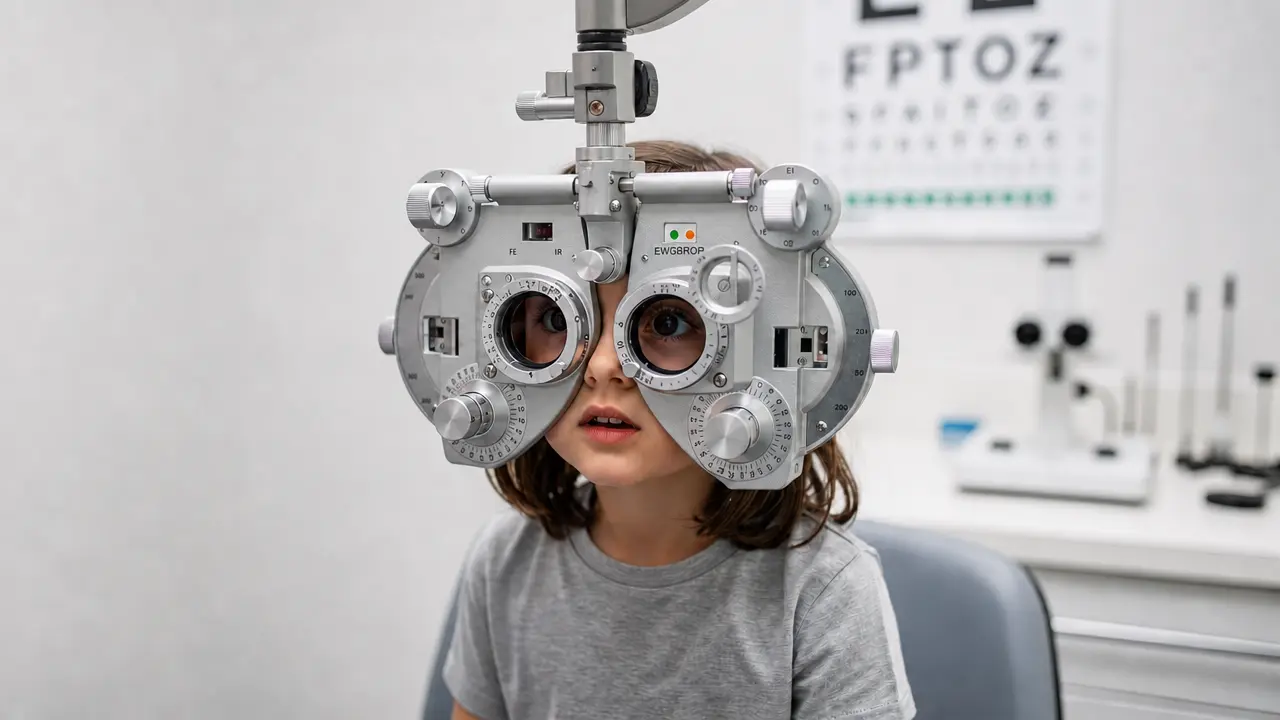
Your pediatric eye exams visit.
We make eye exams something your child won't dread. Visits are unrushed and kid-friendly, and we'll walk you through everything we find. Most school-age exams take about 30 minutes.
When kids need exams, and the signs parents miss.
A good rule of thumb for Northwest Arkansas families: a first comprehensive exam around age 3, another before kindergarten, and then yearly through the school years. Those growth-year exams matter because children's eyes can change quickly, and because the visual system is still developing. Conditions like amblyopia, often called lazy eye, are very treatable when caught early and much harder to treat once development slows.
School vision screenings are useful, but they are not a substitute. A screening checks distance sharpness in one quick test. It does not evaluate how the eyes team together, how well they focus up close for reading, eye health, or whether one eye is quietly doing all the work while the other weakens. Plenty of kids pass a screening every year while a real vision problem goes unaddressed.
Children almost never say their vision is blurry, because whatever they see is normal to them. The problem shows up in behavior instead. Watch for sitting close to the TV or the board, losing their place while reading, skipping lines, short attention span during homework, head tilting or covering one eye, frequent headaches after school, or a kid who used to enjoy reading suddenly avoiding it. Any of these is a good reason to book an exam rather than wait for the next screening.
Two follow-ups come out of pediatric exams often enough to mention. If your child's nearsightedness is increasing at consecutive visits, ask us about myopia control, because there are real options for slowing that progression instead of just chasing it with stronger lenses each year. And when the exam reveals an eye teaming or focusing problem behind reading struggles, vision therapy can retrain those skills. Either way, the visit itself is built to be easy: kid-friendly pacing, plain explanations, and a doctor who is genuinely good with nervous first-timers.
Common questions about pediatric eye exams
Isn't the school vision screening enough?+
School screenings only test distance vision (the eye chart). They miss focus problems, eye alignment issues, and most eye health concerns. About 1 in 4 kids has a vision issue a school screening would miss.
How do you examine kids who can't read yet?+
We use pictures, shapes, and other age-appropriate methods. Younger kids don't need to know letters.
Does my child need glasses if they can read fine at school?+
Maybe not — but vision problems often show up as headaches, frustration with reading, avoiding close work, or trouble paying attention. A real exam can tell you.
Do you accept Arkansas Medicaid for kids?+
Yes. We accept Arkansas Medicaid and a wide range of vision plans for pediatric exams.
Ready to get started?
Book a pediatric eye exams appointment online or call us directly. New patients welcome.
Related care: Myopia control & Ortho-K · Comprehensive eye exams
Patients also ask: At what age is it recommended to have a first eye exam for a child? · Can my pediatrician do an eye exam?
Let's see what good vision can do.
Book online in under a minute, or call us directly. New patients welcome.