
Myopia Control & Ortho-K in Pea Ridge
If your child's prescription is getting stronger every year, that's myopia progression — and it's not just an inconvenience. High myopia increases lifetime risk of serious eye disease.
What sets our myopia control & ortho-k apart.
If your child's prescription is getting stronger every year, that's myopia progression — and it's not just an inconvenience. High myopia increases lifetime risk of serious eye disease.
Axial length measurement
We measure the actual length of the eyeball — the best predictor of myopia progression.
Ortho-K candidacy
Custom overnight lenses reshape the cornea so your child sees clearly all day, no glasses or contacts needed.
Soft multifocal contacts
Daily-wear contact lenses designed specifically for slowing myopia progression.
Annual progression tracking
We watch the rate of change closely and adjust treatment as your child grows.
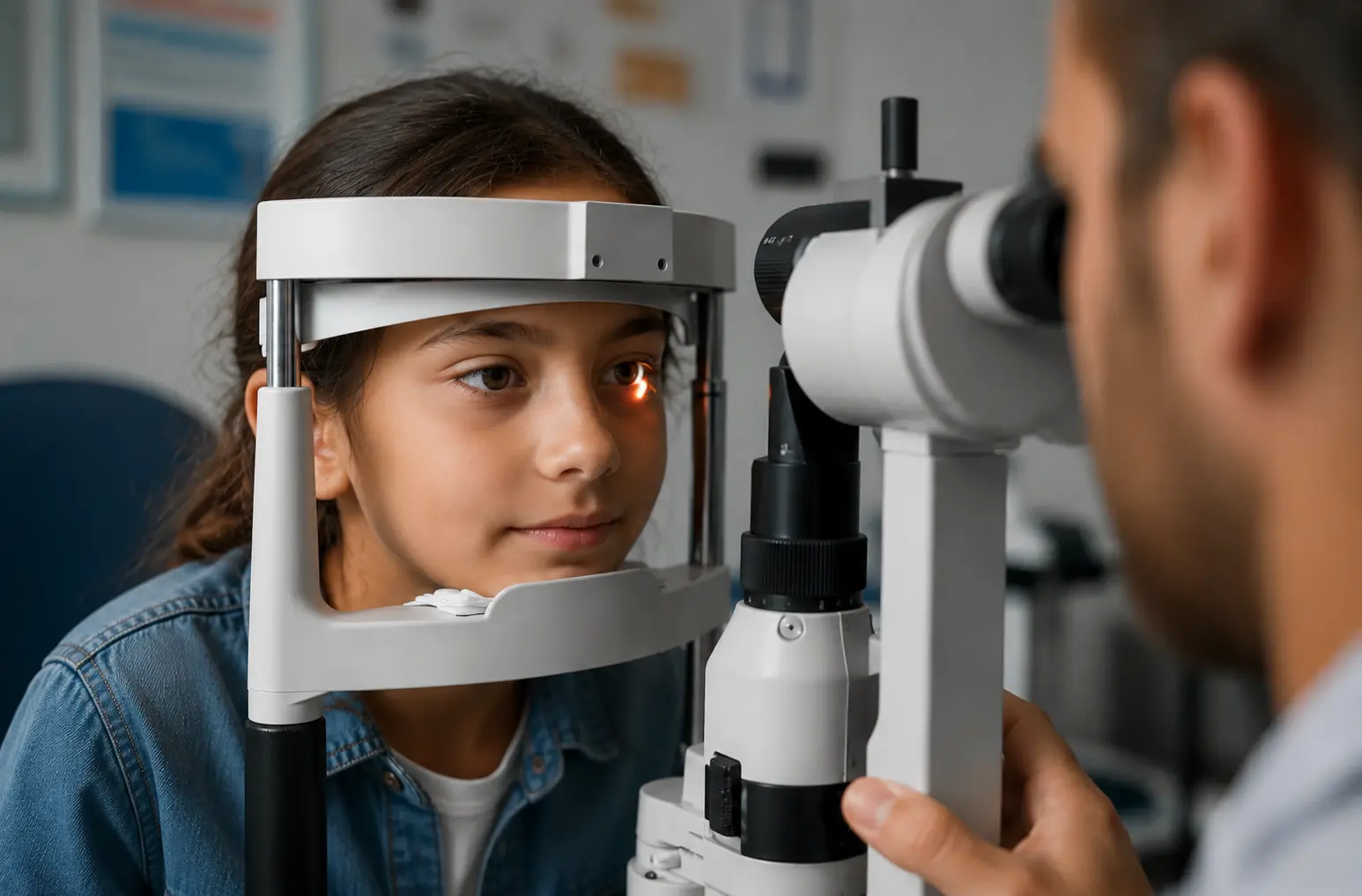
Your myopia control & ortho-k visit.
Myopia control starts with a specialty evaluation — different from a routine exam. We discuss treatment options based on your child's age, prescription, lifestyle, and progression rate, then build a plan you both feel good about.
Every diopter prevented protects your child's future eyes.
Myopia is not just a glasses prescription. As a nearsighted eye grows longer, the stretching of the retina modestly raises lifetime risk for retinal detachment, myopic maculopathy, glaucoma, and early cataracts, and the higher the final prescription, the higher those risks sit. That is why the goal of myopia management is bigger than clear vision today. It is helping your child arrive at adulthood with the lowest stable prescription we can reasonably achieve.
The research on this is encouraging. Modern myopia control approaches can meaningfully slow progression in many children compared to standard glasses alone, and a child who plateaus around -3.00 instead of drifting to -6.00 carries measurably less risk for the rest of their life, wears thinner and lighter lenses, and keeps more correction options open as an adult.
Timing matters more than anything else. Myopia progresses fastest during the growth years, typically between ages 7 and 15, so the earlier a plan starts, the more progression there is left to prevent. If your child's prescription has jumped at back-to-back visits, that is the signal to act rather than wait.
There is no single right tool, which is why the plan starts with an evaluation rather than a product. Overnight Ortho-K lenses reshape the cornea while your child sleeps, providing clear daytime vision with no glasses or daytime contacts, and they remain the option families ask about most. For other children, specialty daytime lenses designed for myopia control or low-dose atropine drops prescribed and monitored by Dr. Daiber may fit better, depending on the prescription, corneal shape, age, and your family's routines. Many plans also include simple habit changes with real evidence behind them, such as more outdoor time and healthier near-work distances.
Whichever path fits, monitoring is the part that makes it myopia management rather than just vision correction. We track how the prescription behaves over time at regular follow-ups, confirm the eyes remain healthy, and adjust the plan if progression is not slowing the way we want. It starts with a pediatric eye exam and a conversation about what you have been seeing at home. Curious how the overnight lenses actually work? Our plain-language guide to Ortho-K covers the routine, the science, and the honest safety conversation.
Common questions about myopia control & ortho-k
At what age should myopia control start?+
Most kids start between ages 7 and 13, when myopia is progressing most rapidly. Earlier intervention generally means better long-term outcomes.
How does Ortho-K work?+
Your child wears specially shaped contact lenses overnight. While they sleep, the lenses gently reshape the cornea. They take them out in the morning and see clearly all day — no glasses needed.
Is myopia control covered by insurance?+
Coverage varies. Some medical plans cover the evaluation; specialty contact lenses are usually out-of-pocket. We'll walk through costs before starting.
What happens if we don't treat it?+
Myopia tends to keep progressing through the teen years. Higher myopia in adulthood is linked to increased risk of retinal detachment, glaucoma, and macular degeneration. Slowing progression now protects vision later.
Ready to get started?
Book a myopia control & ortho-k appointment online or call us directly. New patients welcome.
Related care: Pediatric eye exams · Specialty contact lenses · Contact lens fittings
Patients also ask: What is myopia in children?
Let's see what good vision can do.
Book online in under a minute, or call us directly. New patients welcome.