
Neurological Vision Care in Pea Ridge
Concussions, whiplash, and certain neurological conditions can disrupt how your eyes work together — leaving you with chronic headaches, light sensitivity, dizziness, or focus problems that don't show up on a standard exam.
What sets our neurological vision care apart.
Concussions, whiplash, and certain neurological conditions can disrupt how your eyes work together — leaving you with chronic headaches, light sensitivity, dizziness, or focus problems that don't show up on a standard exam.
Binocular vision testing
How well your eyes work together at near and distance.
Accommodative function
How your eyes focus and shift between distances — often disrupted post-injury.
Visual tracking
How smoothly your eyes follow moving objects or scan text.
Light & motion sensitivity assessment
We identify what triggers symptoms so we can target treatment.

Your neurological vision care visit.
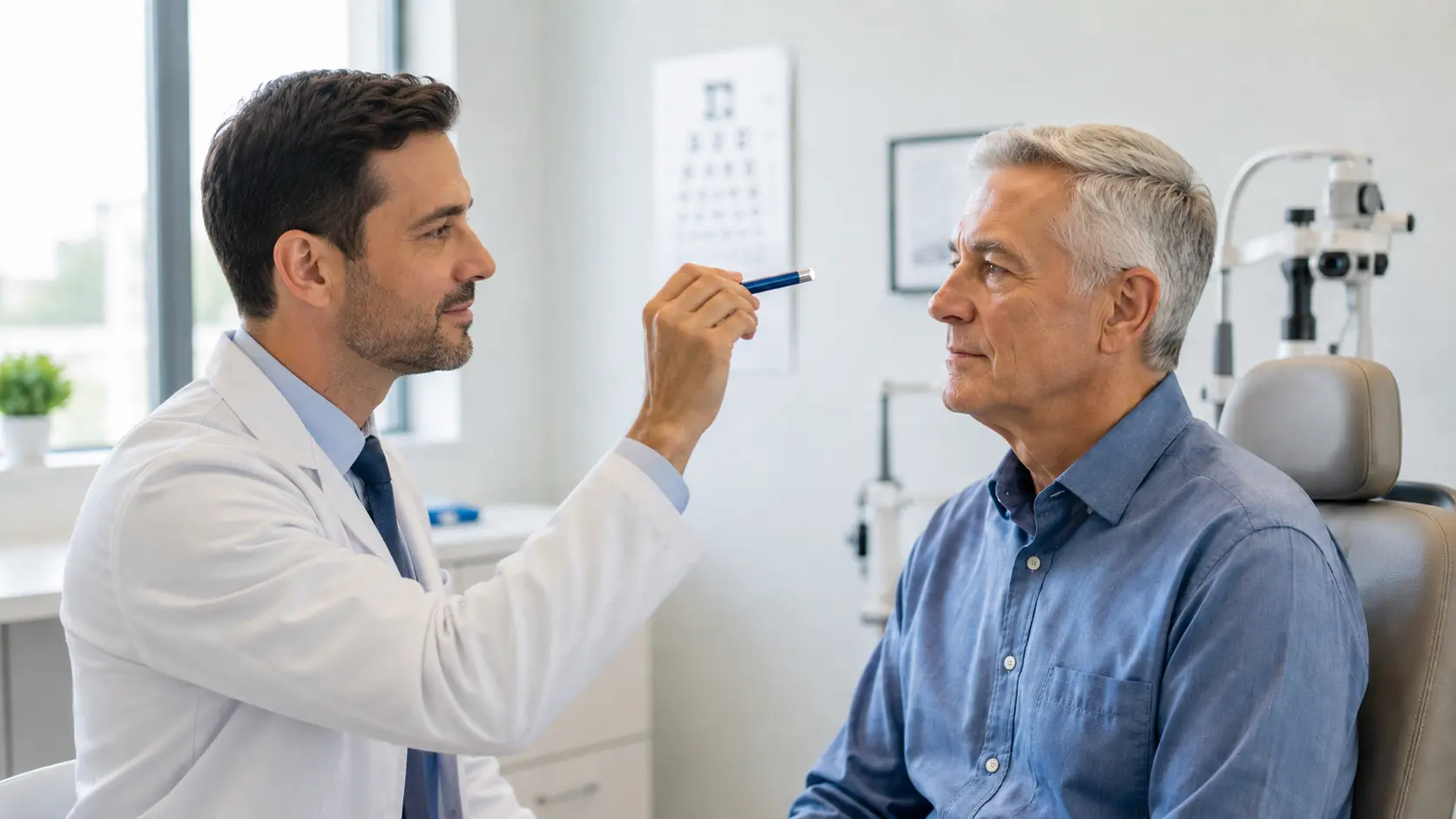
A neurological vision consult is more in-depth than a standard exam — plan on 60–90 minutes. We'll review your symptoms, medical history, and run specialized tests to identify exactly what's contributing to your symptoms. From there, we build a treatment plan that often includes vision therapy or specialty lenses.
When the eyes are fine but vision still struggles.
Roughly half of the brain participates in vision in some way, which is why a concussion, stroke, or other neurological event so often leaves visual symptoms behind even when the eyes themselves are perfectly healthy. Patients describe it in remarkably consistent ways: words swim on the page, busy places like grocery stores feel overwhelming, screens are exhausting within minutes, light feels aggressive, and driving or riding as a passenger brings on dizziness or nausea.
These symptoms are frustrating partly because standard eye exams often come back normal. Visual acuity can be a clean 20/20 while the systems that aim, focus, track, and team the eyes are struggling to work together. That mismatch is exactly what a neuro-optometric evaluation is designed to find. We test how the eyes converge on near targets, how smoothly they track moving ones, how quickly focus shifts between distances, and how well the two eyes align under real demands, not just on a letter chart.
Post-concussion patients make up a large share of these visits, from student athletes to adults recovering from car accidents and falls. The encouraging news is that these visual systems are trainable and treatable. Depending on what testing shows, a plan may include specialized lens prescriptions, prism to relieve the effort of keeping the eyes aligned, tints for light sensitivity, targeted vision therapy to rebuild the underlying skills, and practical strategies for screens, reading, and work while recovery progresses.
If headaches are your dominant symptom, our headache and migraine vision care page covers that side of the picture. And if you have already been through neurology, therapy, or both without full relief, this evaluation is still worth doing. The visual system is one of the most commonly missed contributors to lingering post-concussion symptoms, and finding it changes the plan.
Common questions about neurological vision care
Do you treat post-concussion patients?+
Yes. Post-concussion vision dysfunction is a major focus of our neurological vision care. We work with patients of all ages.
What's vision therapy?+
Vision therapy is a structured program of exercises designed to retrain how the eyes and brain work together. It's evidence-based and especially effective for post-concussion symptoms.
Do I need a referral from a neurologist?+
No referral required. Many of our patients are referred by physical therapists, neurologists, or primary care doctors, but you can book directly.
Is this covered by medical insurance?+
Often yes — when symptoms are related to a documented injury or medical condition. We'll verify your coverage before treatment.
Ready to get started?
Book a neurological vision care appointment online or call us directly. New patients welcome.
Related care: Headache & migraine vision care · Vision therapy · Comprehensive eye exams
Let's see what good vision can do.
Book online in under a minute, or call us directly. New patients welcome.